
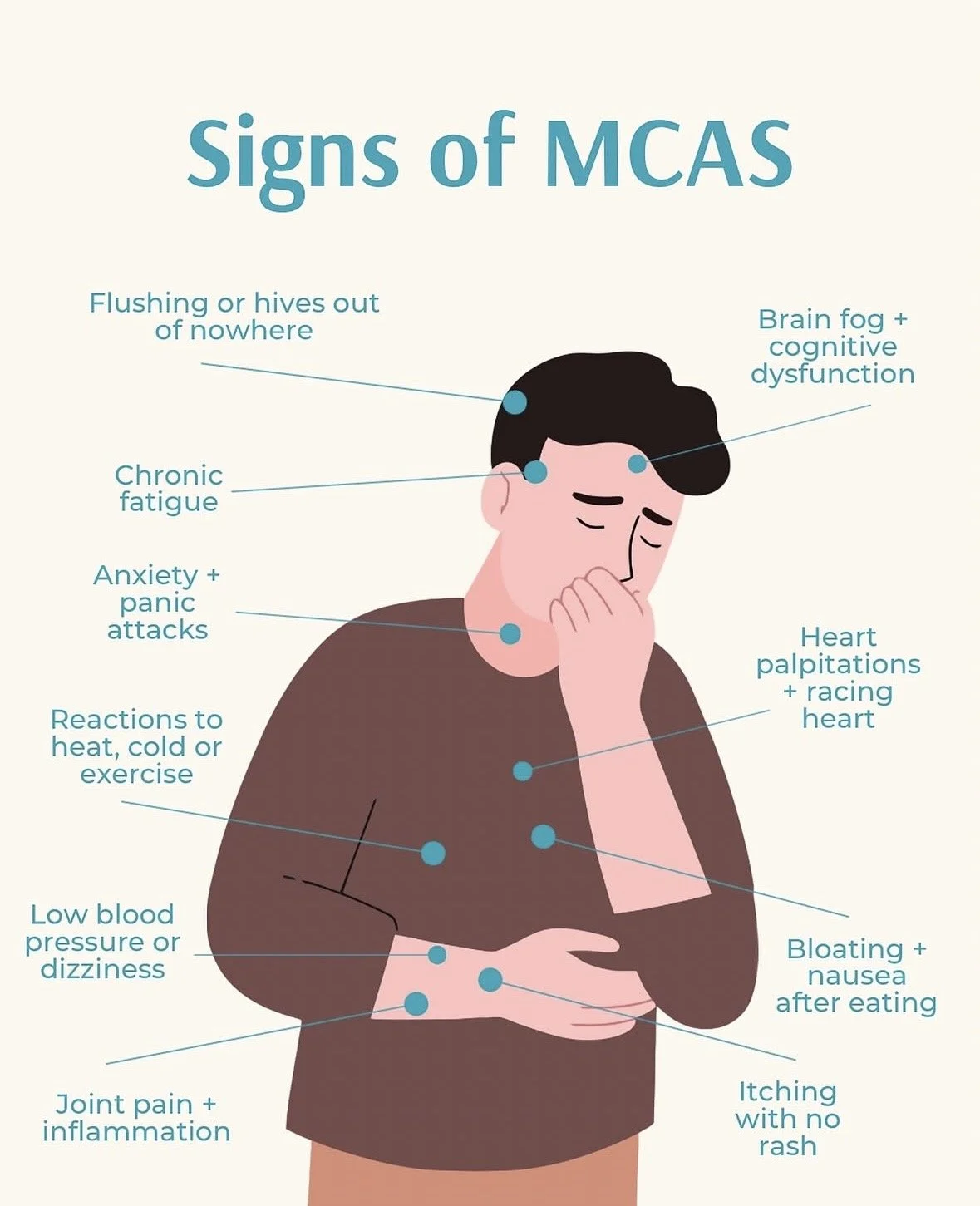
If you read part one of this series and suspect that mast cell dysregulation could be at the root of all of your “random” symptoms, remember that diagnosis is incredibly elusive. Not only does the multisystemic nature of Mast Cell Activation Syndrome (MCAS) pose a challenge for a medical system that tends to compartmentalize symptoms by organ system, but there’s also no definitive diagnostic test. In light of these barriers, we rely on the evaluation of symptoms before and during the implementation of a protocol for mast cell stabilization and histamine downregulation.
Importantly, due to the highly sensitive state of those who are susceptible to MCAS, we must approach these protocols with extreme care. While it’s exceedingly common for MCAS to develop alongside other viral, bacterial, and/or fungal issues, the order of treatment is key. With the intimate link between mast cells and the nervous system, protocols that lead with detox or an aggressive antiviral treatment without first stabilizing mast cells only lead to more flaring. Unfortunately, many well-meaning functional medicine practitioners and protocols miss this, failing to recognize that we must first create enough inner safety and stability to tolerate the elimination of pathogens. Otherwise, we risk pushing the body beyond its capacity and perpetuating the very cycle of reactivity we are trying to resolve.

A nervous system informed-perspective leads with stabilization to account for the demands of a body that’s both hypervigilant and hypersensitive. Mast cells like routine and stability; any changes or disruptions can trigger them into over firing, which could be instigated by anything from lack of sleep to changes in temperature or barometric pressure. Take your time forming and implementing your protocol. You might spend months stabilizing, which is just fine. Go slow and incorporate changes in a way that feels natural. Building consistency and routine is already supportive, but when we feel the positive effects of a habit (or collection thereof), we further increase our capacity to experiment with adding more.
The suggestions below are categorized according to the focus area of stabilization, and will support those with both MCAS and HIT (Histamine Intolerance), since there is so much overlap.
Nervous system:
This is a particularly overlooked part of stabilization and the best starting point if you are highly sensitive and experience difficulty tolerating supplements, protocols, exercise, etc. Integrative RD Michelle Shapiro explains:
When you live in a body with active MCAS, two things are happening at the same time:
Real, biochemical symptoms. Histamine flooding, autonomic dysfunction, mast cell mediators firing, and structural barriers. All of it is completely real!
But, there's also a limbic system response (in the brain) to those symptoms that creates a second layer of chemical activation. Think of it as your reaction to those (very real) symptoms. This can create more stress hormones, more mast cell activation, and more histamine release.
My favorite tool for nervous system regulation is Primal Trust, (click here for their website, or here and here for my blog posts about this, and use code ACUSPOT for 10% off when you first sign up) because we really want to start working on underlying patterns and thought loops that also keep us in a state of stress. However, anything that teaches and imparts a feeling of safety to the body is valuable!
Time in nature
Acupuncture
Nervous system tools: breath work, yoga Nidra, voo breath, etc.

Nutrition:
Do not skip meals; eat snacks if needed
Protein forward meals with approximately 30g of protein per meal
Avoid known food triggers
If you can eat a lower histamine diet, it will help with your overall bucketload. However eating enough and eating consistent meals is more important than adhering to a low histamine diet
Eating a low histamine diet can have a lot of nuance to it and it gets really detailed. To keep it simple, avoid: leftovers (over 24 hours; freeze leftovers as soon as possible); aged and fermented foods (vinegar, cheese, sauerkraut, kombucha, bone broth, etc). Other histamine-food triggers can include: tomatoes, citrus, chocolate, spinach.
Daily routine/circadian rhythm support:
Get outside and expose your eyes to sunlight first thing in the morning
Dim lights at night and minimize (or, ideally, turn off) screens after dark
Cut back on screen time, get outside as much as possible
Be asleep by 10-10:30pm
Supplements/meds that calm mast cells:
An important rule of thumb when trying new supplements is to add one at a time. For highly sensitive people, start with just sprinkles (microdose) and work your way up. Remember: it’s better to go low and slow than to start fast and flare! It might feel really slow, but in the long run it’ll save you time. If you do flare or notice a negative reaction, stop that supplement and move on. If you notice no change, keep it in. Dr. Neil Nathan discusses how often mast cell support needs to be compounded, and it’s with the cumulative effect over time that you’ll notice a change.
If you’re highly sensitive, you can also start with teas: nettle, chamomile and/or ginger. I recommend adding these in regardless
Top supplement recommendations (you don’t need all of these but you might need to stack or layer a few of them; work with a practitioner to help you figure out which are the best fit for you):
Histaeze by Designs for Health (my favorite combo product)
DAO
AllQlear
Quercetin
Black cumin seed
Nettles
Perilla seed
PEA
Luteolin
Some supplements we think of as “healthy” might actually be flaring your mast cells! To start, I would recommend taking the following out and trying to reintroduce later when you can tell if it’s having a negative reaction or not:
Probiotics (with the exception of Seeking Health HistaminX Probiotics - a special probiotic derived for histamine support)
NAC, glutathione - supplements that support detoxification
B supplements/B complex
Medications will need to be discussed with a doctor but some options can include: OTC non-drowsy antihistamines (e.g., Zyrtec, Claritin, Allegra), Pepcid, ketonifen, cromolyn sodium, and peptides like tirzepatide. Do NOT take Benadryl long term; it can affect cognition and has been shown to be linked to higher dementia rates. Can be used for emergencies or on an as-needed basis.
Other Support:
Gentle movement within your limit, if you also have dysautonomia/POTS, graduated and recumbent movement might be best
Drainage/lymphatic support: daily bowel movement, hydration, epsom salt baths, shaking or vibration plate, dry brushing, castor oil packs.
Who to follow for more information and guidance:
Dr. Becky Campbell
Michelle Shapiro, RD
Lily Spechler, RD (The Long COVID Dietitian)
MCAS 360 clinic
Tom Nikkola, functional health coach
Dr. Neil Nathan