
The mast cells in our bodies sit at the confluence of immunity, inflammation, and sensitivity, helping to explain the huge range of symptoms that can appear when those cells are over firing. These specialized cells link the immune and nervous systems, with receptors responding to everything happening both inside and outside the body; in fact, these cells are highly concentrated in areas that bridge our internal and external environments, like the skin, respiratory tract, and digestive system. As our first responders to stressors, mast cells help protect the body from threats, but when overactive, cause a chain reaction that leads to both hypersensitivity and hypervigilance. It’s the perfect storm for multisystem chronic illness.
Mast Cell Activation Syndrome (MCAS) is an increasingly common but underdiagnosed condition, affecting between 9-17% of the population. However, Beth O’hara, founder of the MCAS 360 clinic, noted that she and her colleagues suspect that up to 80% of those with chronic illness are likely to have some degree of mast cell dysregulation. Indeed, MCAS has become more prevalent in the past six years following Covid (from both the natural infection and vaccine), and we are learning so much about the ways it connects to chronic inflammation, immune dysregulation (including autoimmunity), and chronic illnesses. Thankfully, we are also discovering effective strategies for stabilizing mast cells.
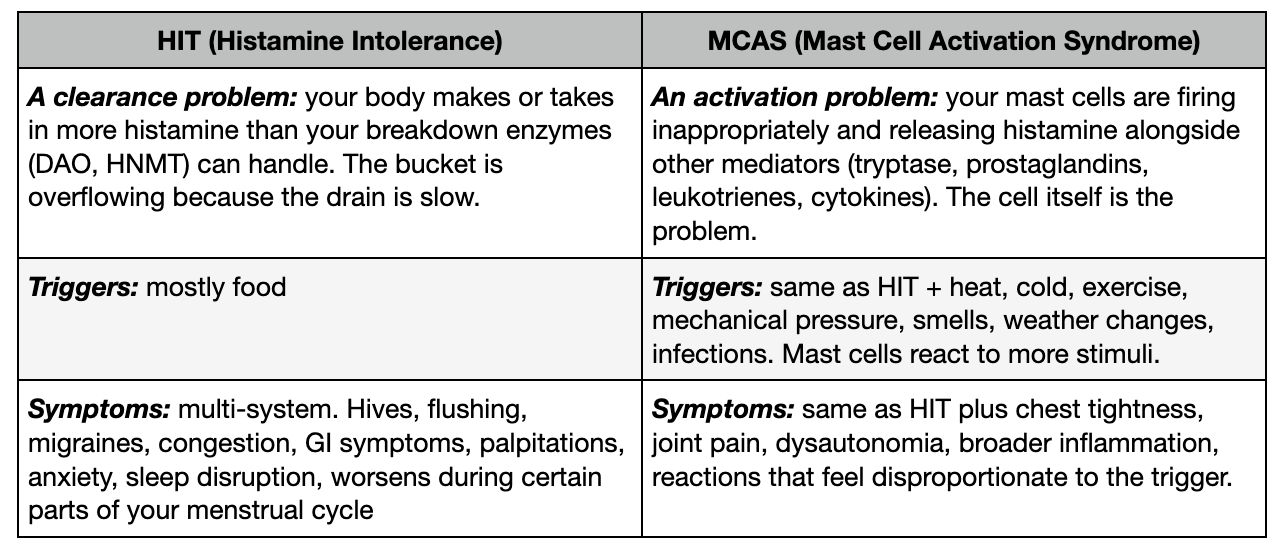
A type of white blood cell, mast cells are an important part of the immune system, found in almost every tissue in our bodies. They have over a thousand mediator signals, the most well known of which is histamine. Other prominent chemical mediators include cytokines, prostaglandins, and serotonin, which is why the symptoms are so diverse and seemingly “random.” When it comes to mast cell dysregulation, there are different levels of severity. It can be helpful to think of it as a spectrum, with histamine intolerance representing a more mild version of MCAS. The chart below explains the differences between mast cell activation syndrome and histamine intolerance according to Dr. Becky Campbell, although she believes that most of her patients are dealing with layers of both.
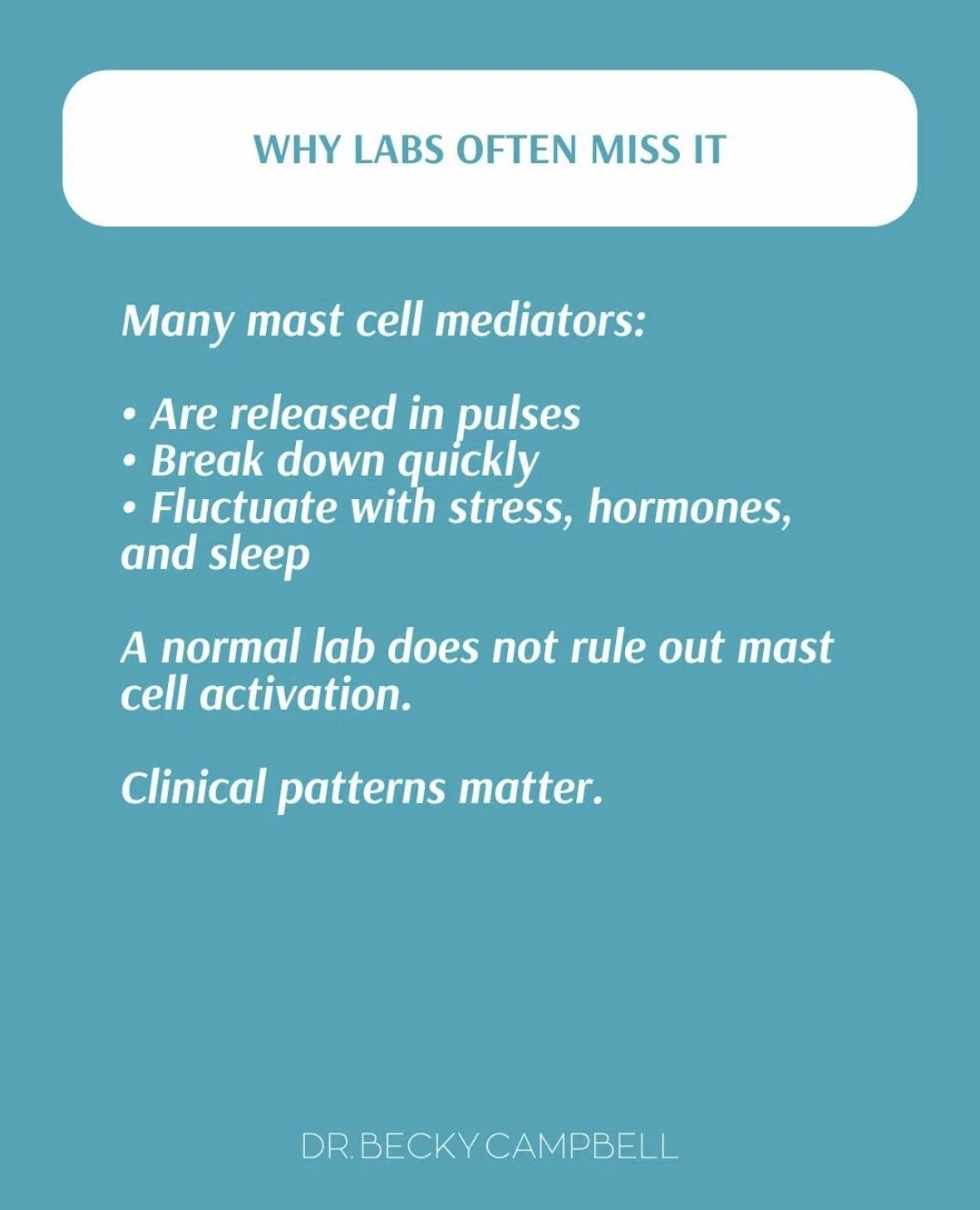
Unfortunately, diagnosis is elusive for two reasons. Firstly, according to a report from Drs. Eric Gordon and Nafysa Parpia, primary care providers and specialists don’t often consider MCAS because “they tend to compartmentalize symptoms by organ system, while MCAS can create symptoms across every part of the body.” Secondly, there isn’t a single definitive test that can produce a clear diagnosis for MCAS. As a result, we rely on the evaluation of symptoms and the improvement of symptoms with a protocol for mast cell stabilization and histamine downregulation.
Full list of potential MCAS symptoms (taken from The Sensitive Patient’s Healing Guide by Dr Neil Nathan):
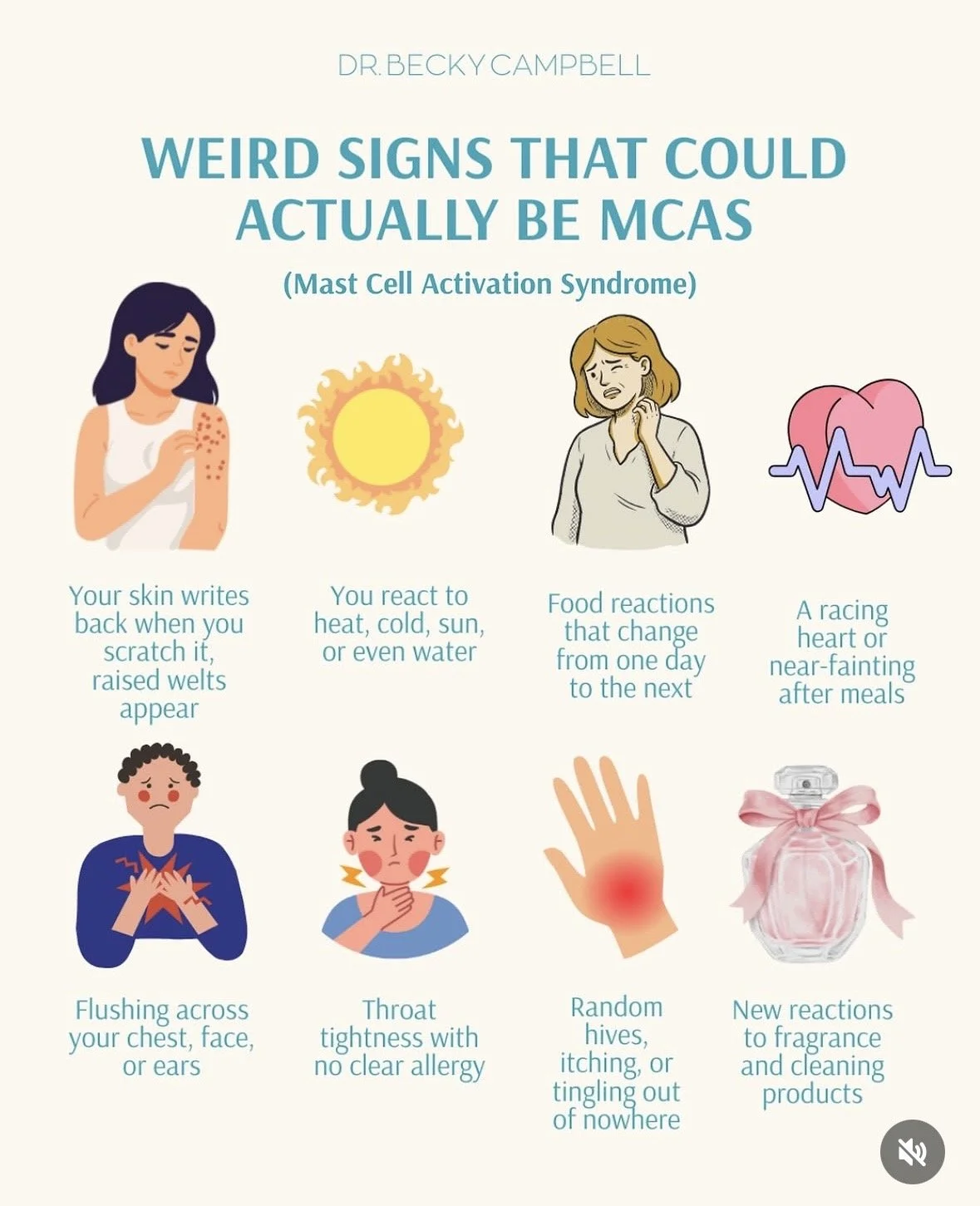
Systemic: fatigue, inflammation, swelling, weight changes, sensitivities to some of the following: food, medicines, environment, chemicals, EMFs
Musculoskeletal: osteoporosis/osteopenia, arthritis that moves around, muscle and/or bone pain, hyper-flexible joints
Skin: itching, flushing, hives, rashes, hair loss, rosacea, psoriasis, eczema
Cardiovascular symptoms: fainting or feeling faint, chest pains, heart palpitations, dizziness, low or high blood pressure
Digestive: mouth burning, diarrhea and/or constipation, nausea, reflux or heartburn, food sensitivities, IBS, throat/tongue swelling, onset of symptoms within 15 mins of eating
Urinary tract: inflammation of tissues, burning sensation, pain with urination, infection-like symptoms of the urinary tract
Brain and nervous system: brain fog, difficulty paying attention, headaches, migraines, depression, anxiety, tingling and numbness, tinnitus
Lung and respiratory: congestion, coughing, shortness of breath, asthma
Reproductive system: endometriosis, painful periods, male and female infertility, hormone imbalances
Eyes: eye pain, redness, trouble focusing, inflammation in the eyes, blurred vision, itchy/watery eyes, irritated eyes
Anaphylaxis or anaphylactoid reactions (can be life threatening): difficulty breathing, itchy hives, flushing or pale skin, feeling of warmth, weak and rapid pulse, nausea, vomiting, diarrhea, dizziness and fainting (NOTE: not all MCAS patients have life threatening symptoms)
A variety of the aforementioned symptoms are often seen in conjunction with chronic fatigue, fibromyalgia, interstitial cystitis, Crohn’s, diabetes, Ehlers-Danlos Syndrome (EDS), POTS, autoimmunity, and autism spectrum disorders. However, it is possible that these conditions are at times misdiagnosed when MCAS is actually the root issue. However, this is an apt reminder that there’s a potentially much higher incidence of MCAS amongst those with chronic health issues. People with MCAS also often have co-occurring issues like Lyme disease, mold exposure, long COVID and more. Oftentimes these viral, bacterial and/or fungal issues do contribute to the sensitization that causes MCAS but the order of treatment is key.
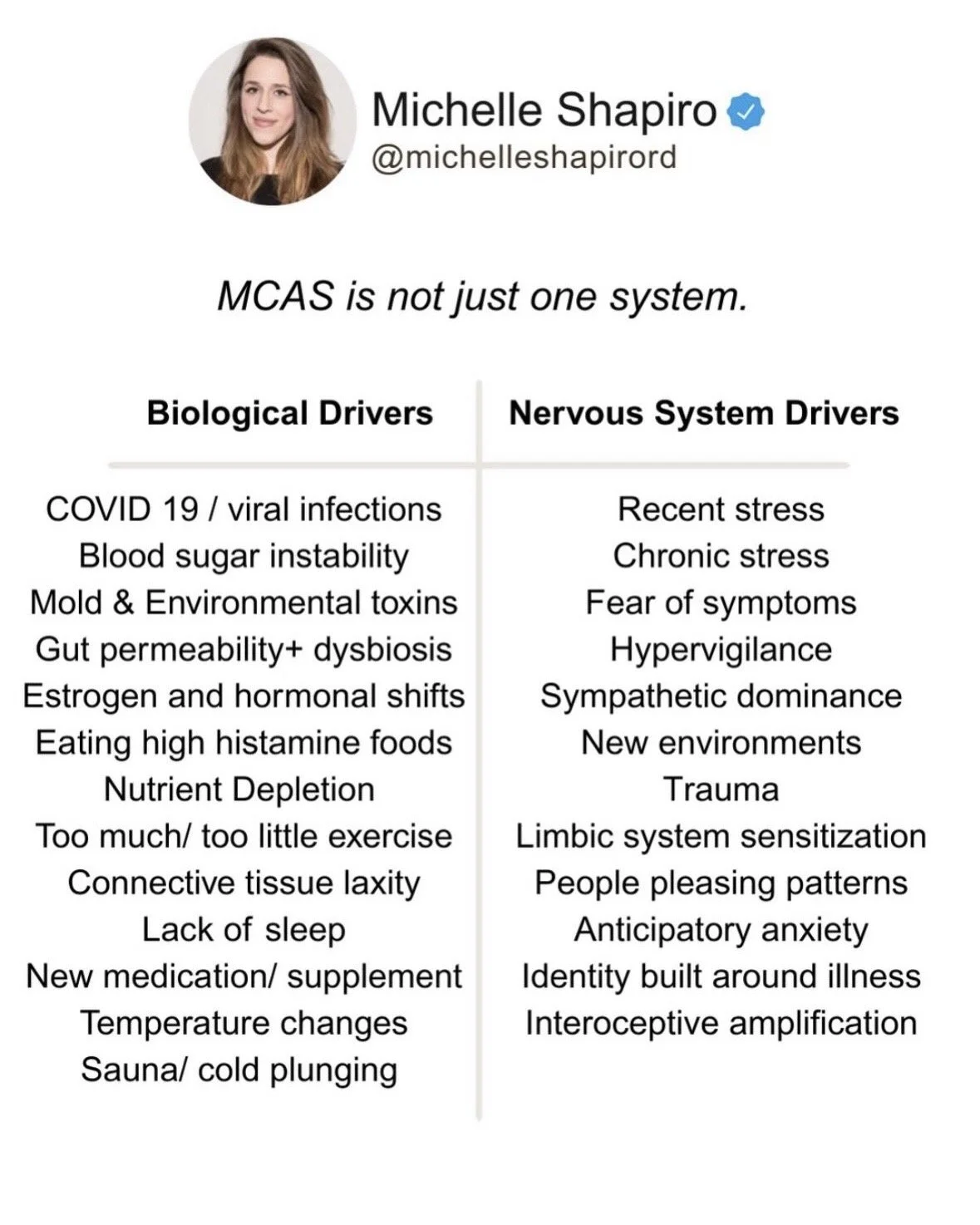
Many functional medicine doctors and protocols go after the detox, antiviral, etc. without first stabilizing mast cells, which leads to more flaring. Because a lot of people with MCAS are highly sensitive people, it’s important to remember that mast cells are intimately linked to the nervous system. The following are some of the root triggers of dysregulated mast cells: mold exposure/toxicity, tick-borne infections, COVID (vaccine and the virus), EMFs, food triggers, chemical toxicity, heavy metal toxicity, nutrient imbalances, epigenetic factors, physical stressors (e.g., surgeries, illnesses, injuries), chronic emotional and/or mental stressors, toxic relationships, and trauma.
Stay tuned for the next blog post, which will cover what to do about MCAS and how to stabilize mast cells