
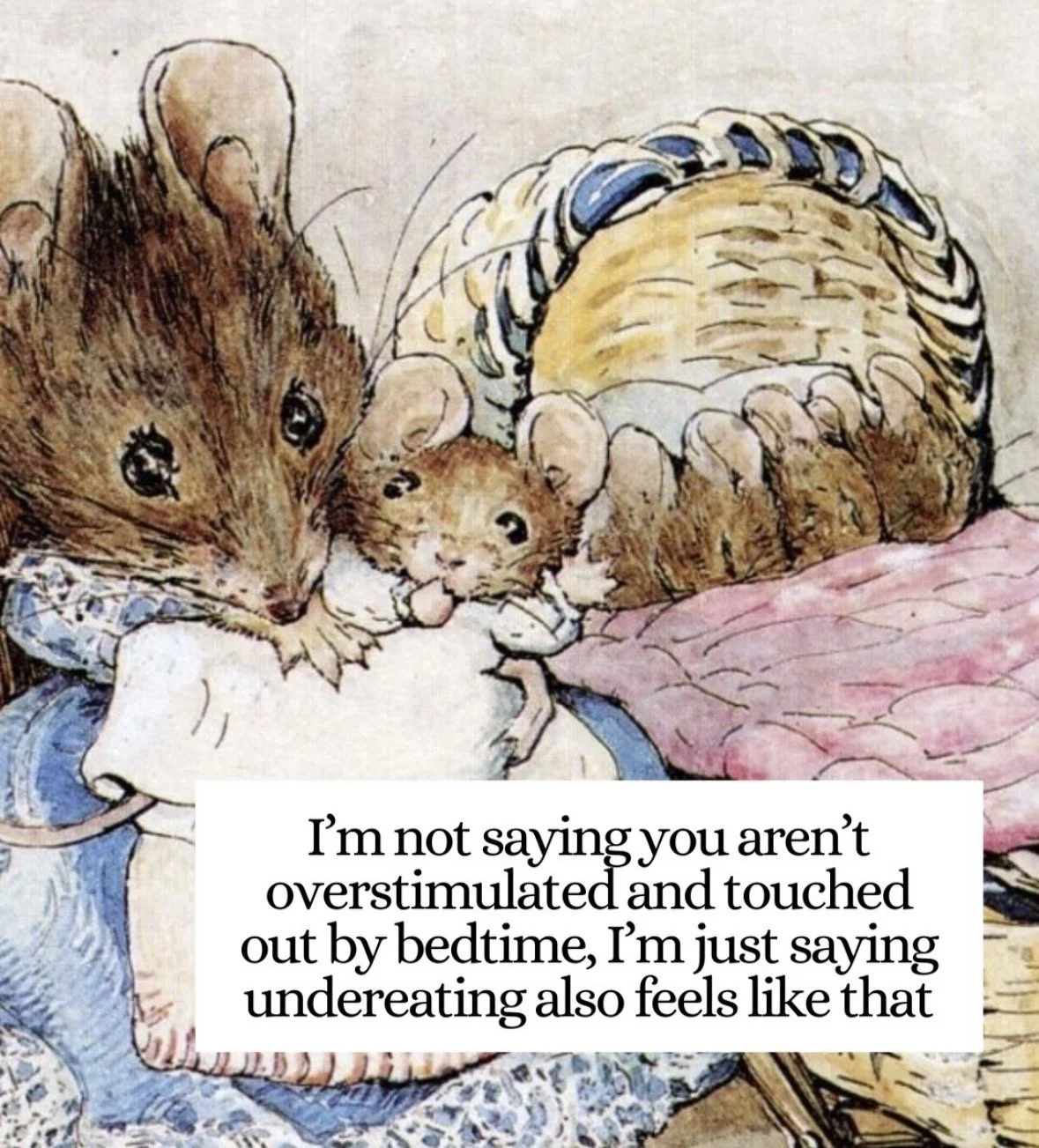
credit to Ashley Wulkan Instagram post
In so many ways, food is the absolute foundation of our health, but it’s not just the quality of food that matters. How often we eat and how much we eat are two factors that are just as important, if not more so. In a society that seems increasingly and chronically unwell, there’s a massive industry preying on all of us who want to feel better and will “do anything” to attain health, yet it has become alarmingly common to neglect the simple (but daily) task of feeding ourselves consistent, nourishing meals. I hear it all the time: “But I’m not hungry” or “I don’t have time.” Whether you are dealing with chronic health issues or not, most of us would do well to reel it all in and make sure we’re tending to the original health regimen: eating enough in regular intervals.
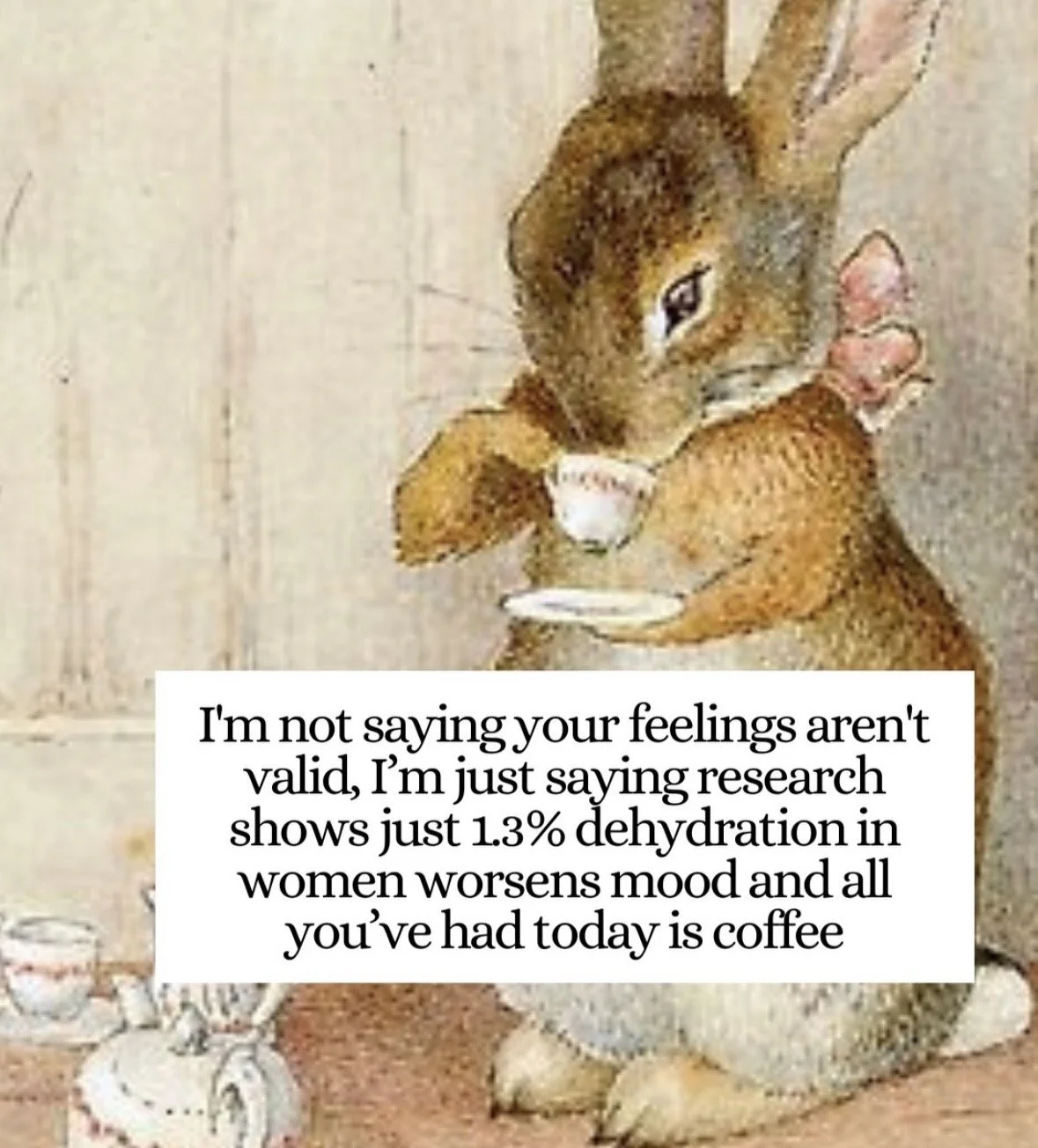
credit to Ashley Wulkan Instagram post
Every single process in the body relies on the sufficient intake of nutrients, micronutrients, minerals, and vitamins obtained (mostly) through food. If we’re not eating enough, we simply won’t have enough of these essential building blocks to properly execute detoxification, hormonal production, neurotransmission, mitochondrial and cellular function, etc. Unfortunately, we are still collectively recovering from a fear of calories, but a calorie is just a unit of energy. Without enough calories, we don’t have the energy required—not only to live life on our own terms, but to complete basic biological processes. It’s high time we understand that weight gain is a much more complex equation than merely counting calories. It has to do with hormones, stress, a felt sense of safety, and (especially) energy management. Ironically, nutrient deficiencies from undernourishment can compromise all of these facets, ultimately contributing to weight gain.
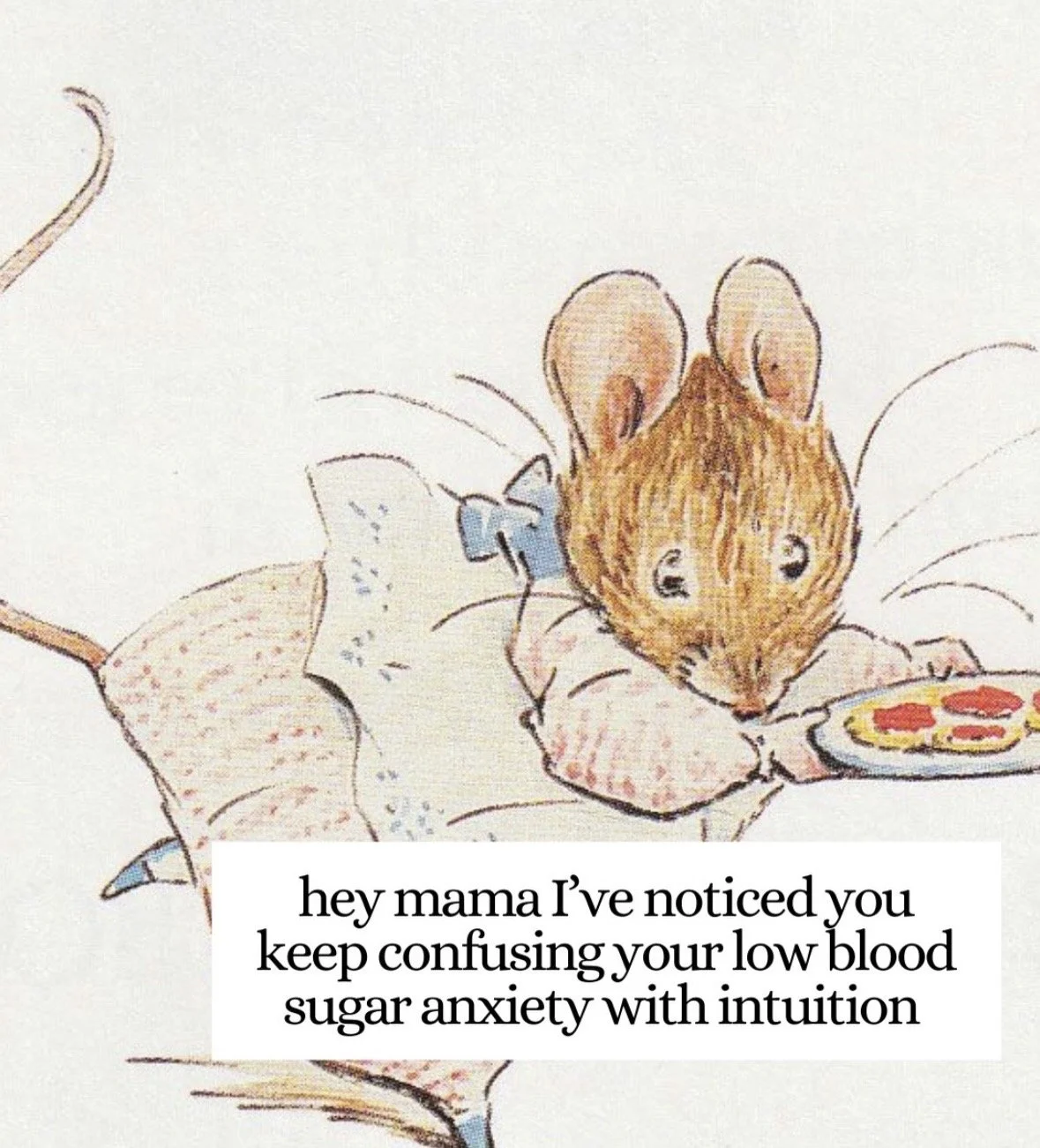
credit to Ashley Wulkan Instagram post
One of the most important but overlooked benefits of being well-nourished is the feeling of safety it creates in the body. As Ashley Wulcan shares in a recent Medicine Stories podcast , “You are primed to read everything as a threat when your physiological needs aren’t met because your body could never understand a reason why you wouldn’t be needing your needs if there was no threat.” Indeed, Dr. Robert Naviaux, who came up with the theory of cell danger response, explained that cells respond to threats by shifting into a heightened protective state, which compromises normal metabolic functions like the transformation of energy and the absorption of nutrients. Regular meals are also the basis of blood sugar regulation; dysregulation on this front is likewise registered as an acute threat by the body. We can create a sense of safety for ourselves by knowing when our next meal is and from our bodies trusting us to provide the reliability of nourishment.
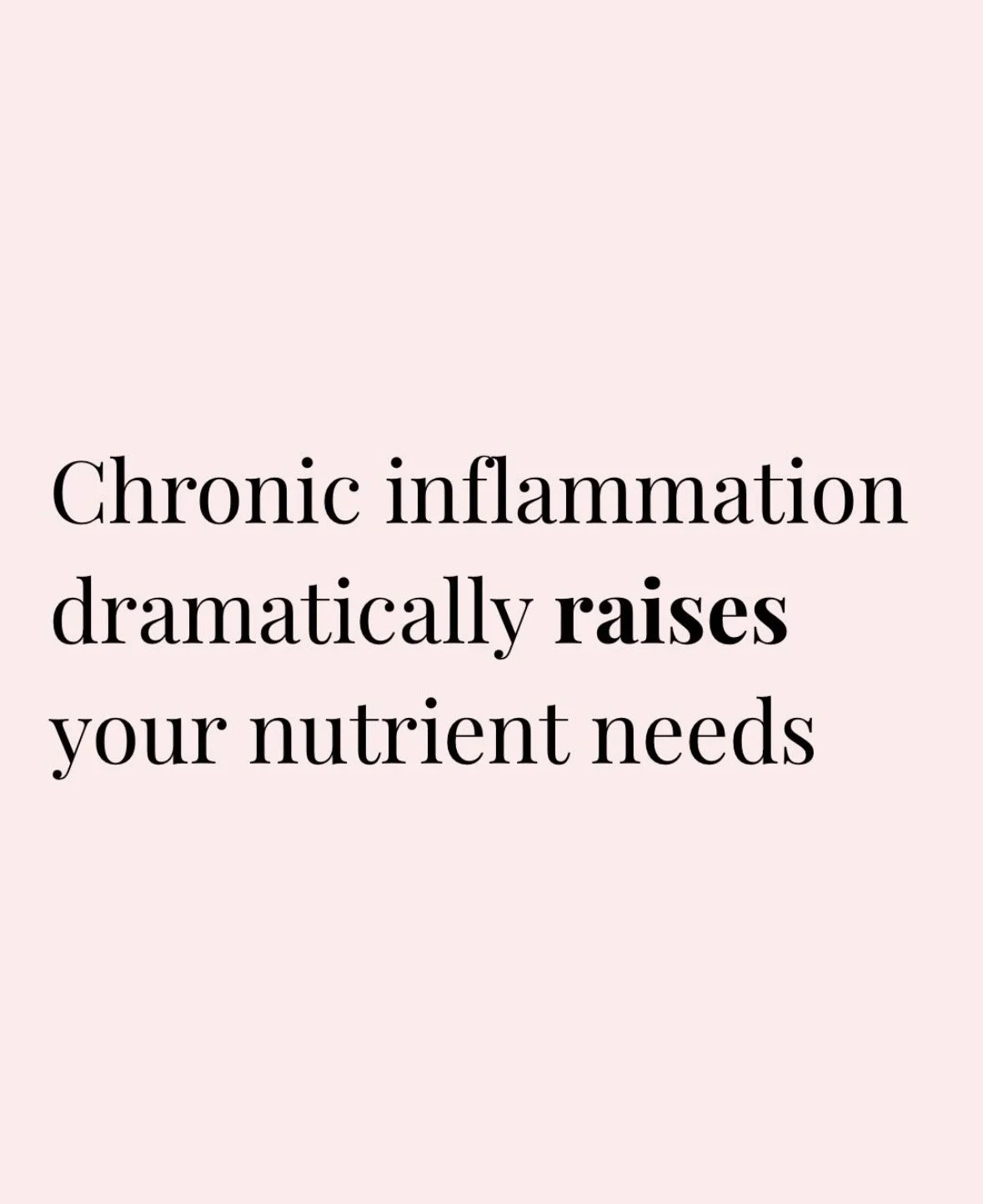
Credit to the Long COVID Dietitian instagram
When it comes to those dealing with chronic health issues, safety is paramount as there is almost always a nervous system component, but there are additional factors to take into consideration. Lily Spengler, the “Long Covid Dietitian,” self-experimented with a COPD diet and discovered that it entails increasing calories by 15%. This caloric uptick helps account for increased metabolic demands on those with chronic health issues, and is now one of her top Long COVID interventions. Tachycardia, breathlessness, poor autonomic function, and high levels of inflammation are all energy wasters. She also highlights specific conditions that are hypermetabolic, meaning the body’s resting energy expenditure is abnormally high, leading to the rapid burning of calories even at rest. These require more calories and protein, and include: cancer, burns, autoimmune diseases, ALS and Parkinsons, HIV, cystic fibrosis, and chronic renal disease. Spengler advises to use an online BMR calculator and add on about 15% to account for energy wasting with any of these conditions. This is also relevant for pregnancy, postpartum, and breastfeeding, all of which have a very high nutrient and caloric demand.
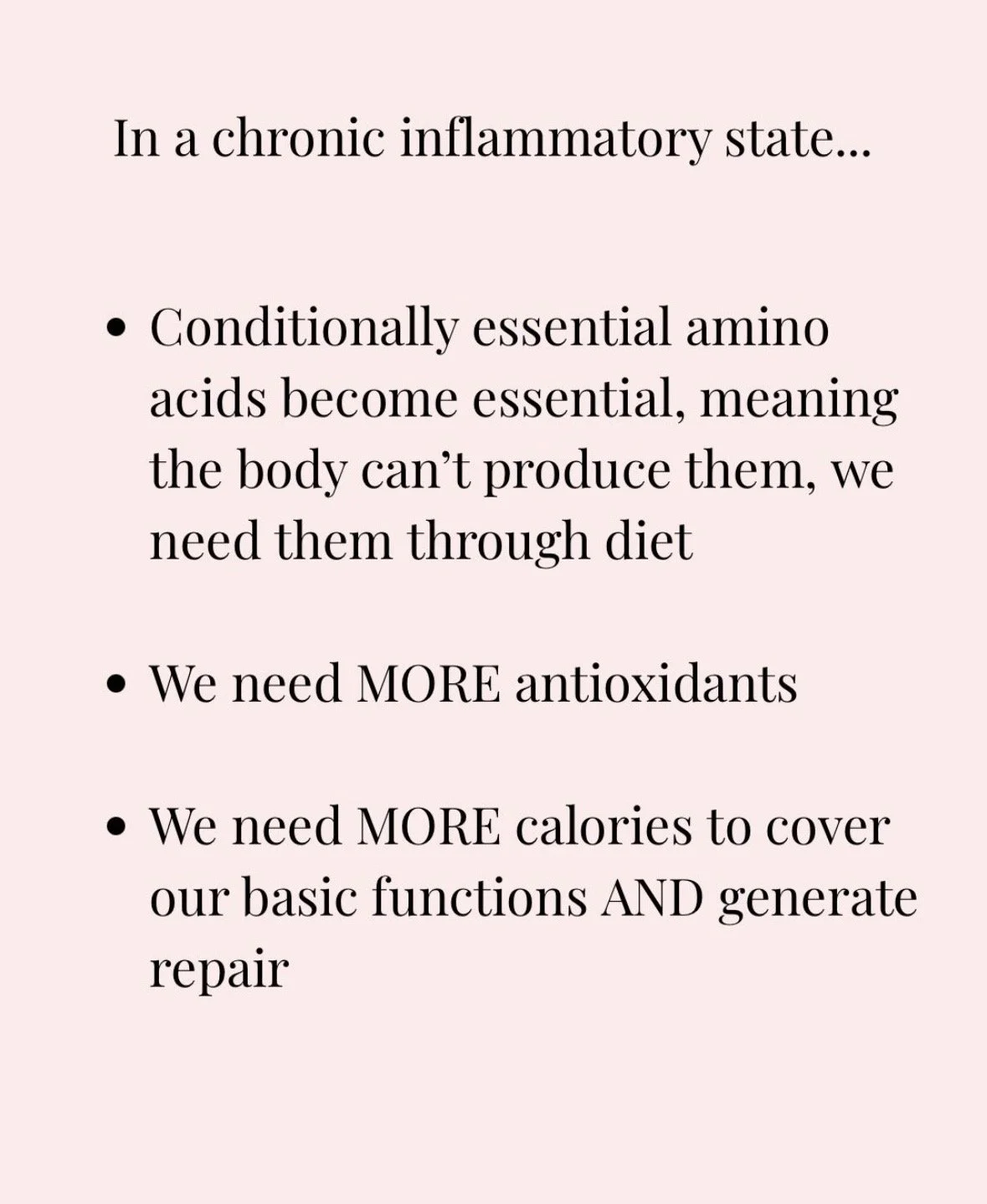
Credit to the Long COVID Dietitian instagram
Our capacity to be truly nourished is more than just eating regularly; it’s also dependent on the quality of food we eat, how well our body can digest it and extract the nutrients, the demands on our system, and more. Supplements can be really helpful, but they are supposed to be just that: supplemental. We cannot delude ourselves into thinking that supplements can replace nourishment; it’s simply not the same as getting nutrients from food in their whole form and through a balanced delivery. Having said that, some people (especially with chronic health issues) are eating enough yet still need supplemental support, and that is perfectly understandable. Eating enough and regularly won’t necessarily solve all your health issues, but I can guarantee you won’t feel well if you aren’t well-nourished. If you’re already doing this and still struggling, please know that it’s not for nothing and it can be a slow process to rebalance metabolism. Slow but steady is really the strategy to bring foundational healing or optimize health!
As a practitioner, before I focus on what someone eats, we focus on eating regularly and then we can fine tune the contents. The aforementioned Medicine Stories podcast episode also featured a great conversation about simplifying nourishment. With the onslaught of health advice online, we have really fallen into overcomplicating the simple act of eating. While each of us certainly has bioindivideal needs, a general rule of thumb is to balance your meals (protein, fat, carb, and vegetables) and eat mostly whole foods. That’s it.
Beyond that, here are some of my tried-and-true tips to help you eat enough and feel truly nourished:
Eat 3 meals a day around roughly the same time and eat 1-2 snacks a day if needed
If you don’t wake up hungry and breakfast is hard, start by spending some time outside with natural sunlight, drinking a glass or water, and taking some digestive bitters to wake up your stomach
How do I know if I need snacks? If you find yourself hungry between meals or even if your energy drops it could be a sign that your body needs more fuel/food. If you have known blood sugar dysregulation adding in snacks is encouraged.
Keep healthy snacks around! Blood sugar stable snacks balanced with protein or fat, like hummus and veggies, beef jerky/meat stick and fruit, fruit and nuts, hard boiled eggs or grass fed greek yogurt
Don’t cut out carbs, but balance them with protein, fat, and vegetables!
If you find that you’re hungry all the time, that could be your body telling you that it’s in a sate of higher metabolic demand - listen to these hunger cues! See how you feel eating more. Of course sweet cravings etc can mean something else.
If you have insomnia, try eating a snack before bed like berries and sunflower seeds, or protein balls and see if that helps you sleep better.